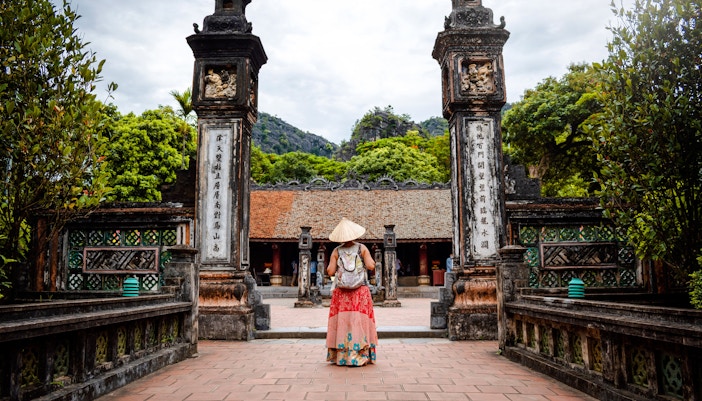
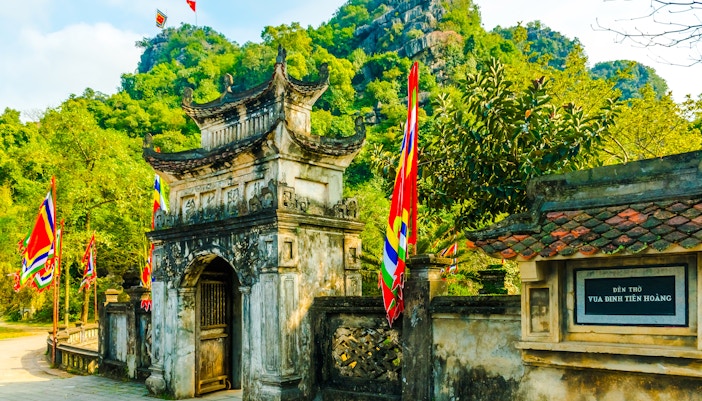
Hoa Lu is the ancient capital of Vietnam, home to temples dedicated to the kings of the Dinh and Le dynasties. It’s a quiet, atmospheric stop where you explore centuries-old courtyards, gates, and shrines.
How to enter Hoa Lu?
Hoa Lu is located within the Trang An–Tam Coc–Mua Cave cluster and sits on the standard route of most day trips from Hanoi. You enter the complex through the main gate, which leads directly into the temple courtyards dedicated to past emperors.
Access to Hoa Lu is included in selected Ninh Binh tours. Entry to Hoa Lu requires specific tickets or tour variants that include the stop.
Why visit Hoa Lu?
Historic capital of Vietnam
Hoa Lu served as Vietnam’s capital in the 10th century under the Dinh and Early Le dynasties. Its temples honor the founding emperors and preserve rare architectural details that survived centuries of change.
Temples, courtyards & carvings
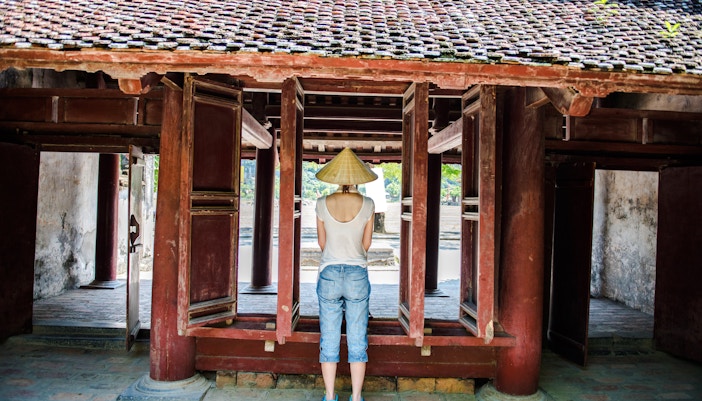
Explore the atmospheric Temples of King Dinh and King Le, where you’ll find antique altars, carved wooden beams, lacquered shrines, and stone gateways set within peaceful royal courtyards.
Scenic backdrop & limestone karsts
The entire complex sits against striking limestone mountains, creating one of Ninh Binh’s most photogenic cultural spots. The natural setting adds depth to the history and makes it a standout stop on any itinerary.
Things to know before booking Hoa Lu tickets
Hoa Lu entry is included on most Ninh Binh tours from Hanoi. You can choose a day tour covering Hoa Lu, Mua Cave, and your choice of either Trang An or Tam Coc.
Expect light walking across stone courtyards, uneven steps, and narrow temple thresholds. Thus, it is not suitable for visitors with mobility limitations.
Modest clothing is recommended because both King Dinh and King Le Temples remain active places of worship.
Timings follow standard Ninh Binh sightseeing flow, with most guided itineraries offering 45–60 minutes at the site.
Exploring inside Hoa Lu
1/6
Ancient gateways & courtyards
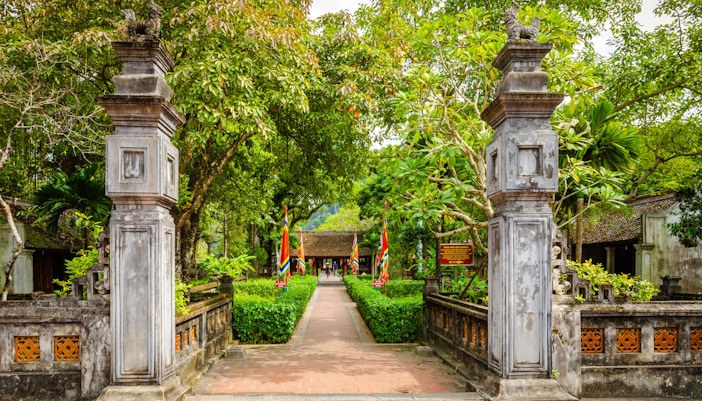
Step through stone gateways into broad courtyards lined with frangipani trees and dramatic karst backdrops. These spaces once hosted royal ceremonies and processions, and you can still spot original stonework that marks the boundary of the old citadel.
Temple of King Dinh Tien Hoang
The first temple features wooden pillars, dragon carvings, and antique altars dedicated to the founder of the Dinh dynasty. Look for the stone royal bed and turtle-shaped pedestals, symbols of longevity and stability in early Vietnamese rule.
Temple of King Le Dai Hanh
A short walk leads to the Le dynasty shrine, known for its lacquered altars, historic incense urns, and detailed roof carvings. This temple highlights the political transition that shaped Vietnam’s 10th-century unification.
Ornamental houses & ancillary halls
These smaller buildings display traditional Vietnamese architecture with tiled roofs, simple courtyards, and preserved wooden beams. They offer glimpses into daily ceremonial life, including how offerings and rituals were organized in the ancient capital.
Royal courtyard & scenic outlook points
The rear courtyards open up to views of the surrounding limestone mountains. These quiet corners provide a sense of the old royal compound’s scale and its strategic location among the karsts.
Historic Inscriptions & Guardian Statues
Before exiting, you’ll find stone plaques, ancient calligraphy, and guardian statues placed to protect the temples. These details reflect Hoa Lu’s blend of spirituality, monarchy, and folklore, preserved across centuries.
Historical significance of Hoa Lu
Hoa Lu served as Vietnam’s first capital in the 10th century under the Dinh and Le dynasties, shaping the country’s early political identity and defensive strategy. Its temples, altars, and courtyards stand on the original palace grounds, offering a rare look at pre-Hanoi royal governance. Surrounded by limestone karsts that functioned as natural fortresses, Hoa Lu became a model for later Vietnamese city planning. Many architectural details visible today (dragon motifs, ancestral altars, stone pedestals) reflect enduring spiritual traditions.
Architectural highlights of Hoa Lu
Classic Vietnamese temple design
Hoa Lu’s Dinh and Le temples feature wooden beams, tiled roofs, curved eaves, and lacquered interiors. Dragon and phoenix carvings reflect 10th-century royal symbolism.
Ancient stone gateways and courtyards
You’ll enter through old stone gateways into ceremonial courtyards built on original limestone blocks. The layout mirrors the palace-style axial planning of early dynasties.
Intricate wooden craftsmanship
Inside, you’ll find nail-free wooden joinery, carved pillars, and ancestral altars. Many details survive from Ly and Tran-era restorations, showcasing traditional craftsmanship.
Know before you go
Timings: Hoa Lu follows standard Ninh Binh sightseeing hours and is visited for around 45–60 minutes on guided day trips.
Location: It sits within the Trang An–Tam Coc–Bai Dinh sightseeing cluster. All our tours include round-trip transfers from Hanoi Old Quarter/Hanoi Opera House, so you don’t need to arrange transport.
Tour flow: You’ll typically explore the Dinh and Le temples, walk through courtyards, and learn about the 10th-century dynasties from your guide. Trang An and Best of Ninh Binh itineraries include Hoa Lu by default (except the Bai Dinh variant).
Modest clothing is recommended, as both temples remain active worship sites. Covered shoulders and knee-length outfits help you access all shrines respectfully.
Footwear should be comfortable and non-slip for stone courtyards and mild steps.
Photography is allowed in outdoor areas; be mindful inside altars where locals pray.
No separate ticket is needed when you choose an itinerary including Hoa Lu; simply follow your guide’s entry instructions.
The complex features stone pathways, uneven courtyards, and a few steps, which may be challenging for travellers with mobility limitations.
Wheelchair access is limited to the outer courtyards.
There are no steep climbs here, making it one of the more accessible stops compared to Mua Cave.
Shade is minimal, so bring a hat or umbrella during sunny hours.
Listen to your guide’s narration at the Dinh and Le temples to understand how Hoa Lu connects the Trang An and Tam Coc landscapes.
Mornings and late afternoons are quieter and better for photos of the temple courtyards.
Keep small cash notes if you wish to buy refreshments nearby.
Visit Le Temple last for a quieter atmosphere and cleaner architectural details.
Frequently asked questions about Hoa Lu tickets
Yes, Hoa Lu is included in select Ninh Binh tours. It’s not included in the Bai Dinh variant of Trang An tours.
Yes, Tam Coc–focused tours visit Hoa Lu.
Guided visits last 45–60 minutes, covering the Dinh and Le temples, courtyards, and historical explanations.
No. Access is included within tours that visit Hoa Lu.
Yes. As active temples, visitors should dress modestly. Covered shoulders and knee-length clothing are recommended.
Yes, it’s kid-friendly. The area involves light walking but no steep climbs, unlike Mua Cave.
Only partially. Courtyards are accessible, but uneven paths and steps inside the temples limit full access.
Photography is allowed in outdoor areas. Be respectful near altars, where flash or close-up shots may be inappropriate.
No. Interpretation is provided through your guide on itineraries that include this stop.
Not really. It fits neatly into the itinerary, typically placed between boat rides and Mua Cave.
Wear comfortable walking shoes suitable for hiking and climbing stairs at Hang Mua Cave.
Bring sun protection such as a hat, sunglasses, and sunscreen.
Accessibility
This experience is not wheelchair accessible due to uneven terrain, stairs at Hang Mua Cave, and boat embarkation/disembarkation.
Guests with limited mobility or serious health conditions are not recommended to join this tour.
Additional information
Children aged 9 and above are charged the same rate as adults.
Free for children aged 0–4 if not occupying a separate seat; only 1 free child per paying adult. Additional children require a child ticket.
Hotel pick-up and drop-off is only available for hotels in Ha Noi Old Quarter; guests staying elsewhere must go to the operator’s office or designated meet-up point.
The operator will confirm your pick-up time and location via Messenger app between 20:00–21:00 the day before your tour. Please check your messages during this time.
Arrive at your hotel lobby or meet-up location at least 10 minutes before the scheduled pick-up time. Early or late pick-up is possible due to shared transfers.
Inclusions
#
Full-day tour of Ninh Binh
Round-trip hotel/meeting point transfers from Hanoi
Transportation by big bus, mini bus, or mini van (as per option selected)
Entry to attractions
English-speaking guide
Lunch & bottled water
Sightseeing boat tour at Trang An
Round-trip electric car at Bai Dinh Pagoda (as per option selected)
Exclusions
#
Compulsory tips for boatman (50,000 VND per pax)
Hotel pick-up and drop-off at hotels outside Ha Noi Old Quarter area
Extra charge of 100,000 VND during holiday periods (29 Apr - 04 May 2025, 30 Aug - 2 Sep 2025, 31 Dec 2025), payable on-site
You can cancel these tickets up to 24 hours before the experience begins and get a full refund.
What to bring
Wear comfortable walking shoes suitable for hiking and climbing stairs at Hang Mua Cave.
Bring sun protection such as a hat, sunglasses, and sunscreen.
Accessibility
This experience is not wheelchair accessible due to uneven terrain, stairs at Hang Mua Cave, and boat embarkation/disembarkation.
Guests with limited mobility or serious health conditions are not recommended to join this tour.
Additional information
Children aged 9 and above are charged the same rate as adults.
Free for children aged 0–4 if not occupying a separate seat; only 1 free child per paying adult. Additional children require a child ticket.
Hotel pick-up and drop-off is only available for hotels in Ha Noi Old Quarter; guests staying elsewhere must go to the operator’s office or designated meet-up point.
The operator will confirm your pick-up time and location via Messenger app between 20:00–21:00 the day before your tour. Please check your messages during this time.
Arrive at your hotel lobby or meet-up location at least 10 minutes before the scheduled pick-up time. Early or late pick-up is possible due to shared transfers.
Inclusions
#
Full-day tour of Ninh Binh
Round-trip hotel/meeting point transfers from Hanoi
Transportation by big bus, mini bus, or mini van (as per option selected)
Entry to attractions
English-speaking guide
Lunch
Sightseeing boat tour at Tam Coc
Exclusions
#
Compulsory tips for boatman (50,000 VND per pax)
Hotel pick-up and drop-off at hotels outside Ha Noi Old Quarter area
Extra charge of 100,000 VND during holiday periods (29 Apr - 04 May 2025, 30 Aug - 2 Sep 2025, 31 Dec 2025), payable on-site
You can cancel these tickets up to 24 hours before the experience begins and get a full refund.
Inclusions
#
Full-day tour of Ninh Binh
Round-trip hotel/meeting point transfers from Hanoi
Transportation by big bus, mini bus, or mini van (as per option selected)
Entry to attractions
English-speaking guide
Lunch & bottled water
Sightseeing boat tour at Tam Coc or Trang An (as per option selected)
Round-trip electric car at Bai Dinh Pagoda (as per option selected)
Exclusions
#
Compulsory tips for boatman (50,000 VND per pax)
Hotel pick-up and drop-off at hotels outside Ha Noi Old Quarter area
Extra charge of 100,000 VND during specific holiday dates (payable on-site)
You can cancel these tickets up to 24 hours before the experience begins and get a full refund.
Day Trips
Most Popular Ninh Binh Day Tour via UNESCO Trang An Route
What to bring
Wear comfortable walking shoes suitable for hiking and climbing stairs at Hang Mua Cave.
Bring sun protection such as a hat, sunglasses, and sunscreen.
Accessibility
This experience is not wheelchair accessible due to uneven terrain, stairs at Hang Mua Cave, and boat embarkation/disembarkation.
Guests with limited mobility or serious health conditions are not recommended to join this tour.
Additional information
Children aged 9 and above are charged the same rate as adults.
Free for children aged 0–4 if not occupying a separate seat; only 1 free child per paying adult. Additional children require a child ticket.
Hotel pick-up and drop-off is only available for hotels in Ha Noi Old Quarter; guests staying elsewhere must go to the operator’s office or designated meet-up point.
The operator will confirm your pick-up time and location via Messenger app between 20:00–21:00 the day before your tour. Please check your messages during this time.
Arrive at your hotel lobby or meet-up location at least 10 minutes before the scheduled pick-up time. Early or late pick-up is possible due to shared transfers.
You can cancel these tickets up to 24 hours before the experience begins and get a full refund.
Book now, pay later
Book now without paying anything. Cancel for free if your plans change.
13 hr.
Guided tour
Transfers available
Pickup available
Day Trips
Scenic Ninh Binh Day Tour via Tam Coc Rice Fields Route
What to bring
Wear comfortable walking shoes suitable for hiking and climbing stairs at Hang Mua Cave.
Bring sun protection such as a hat, sunglasses, and sunscreen.
Accessibility
This experience is not wheelchair accessible due to uneven terrain, stairs at Hang Mua Cave, and boat embarkation/disembarkation.
Guests with limited mobility or serious health conditions are not recommended to join this tour.
Additional information
Children aged 9 and above are charged the same rate as adults.
Free for children aged 0–4 if not occupying a separate seat; only 1 free child per paying adult. Additional children require a child ticket.
Hotel pick-up and drop-off is only available for hotels in Ha Noi Old Quarter; guests staying elsewhere must go to the operator’s office or designated meet-up point.
The operator will confirm your pick-up time and location via Messenger app between 20:00–21:00 the day before your tour. Please check your messages during this time.
Arrive at your hotel lobby or meet-up location at least 10 minutes before the scheduled pick-up time. Early or late pick-up is possible due to shared transfers.