Bai Dinh Pagoda | Explore Vietnam’s largest Buddhist complex
Bai Dinh Pagoda is Vietnam’s largest Buddhist complex, known for its grand temples, colossal statues, and serene spiritual atmosphere. Visitors can explore its gardens, halls, and iconic towers.
How to access Bai Dinh Pagoda?
Bai Dinh Pagoda is located within the Ninh Binh province, about 30 minutes from the city center. For independent visitors, entry to the Bai Dinh Pagoda complex is free, but you will have to pay for optional services like the electric car shuttle, the Bao Thap Tower, and parking.
Bai Dinh Pagoda in a nutshell
Must-see highlights
Bai Dinh Pagoda features Vietnam’s largest bronze Buddha statue, sprawling temple halls, and intricate carvings. Visitors can explore the main courtyard, bell towers, and serene garden areas.
Cultural significance
The complex is a major pilgrimage site, reflecting Vietnamese Buddhist traditions and local spiritual heritage. It also hosts festivals and ceremonies throughout the year.
Unique facts
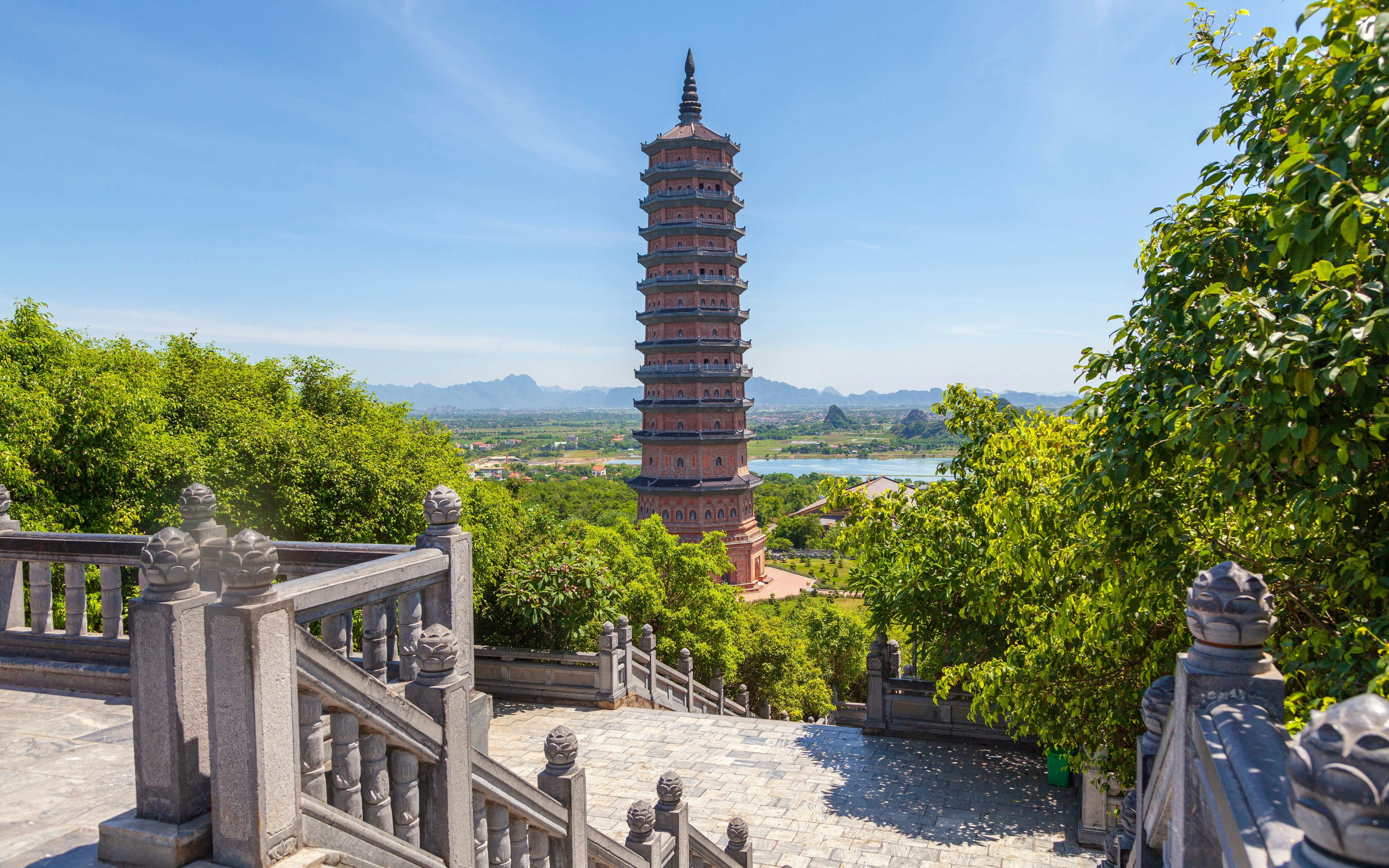
Bai Dinh Pagoda is renowned for its record-breaking features, including the largest bronze Buddha statue in Southeast Asia and Vietnam’s longest pagoda staircase.
Things to know before booking Bai Dinh Pagoda tickets
Access to Bai Dinh Pagoda is included only in select full-day Ninh Binh tours featuring Trang An. Other tours feature Hoa Lu with Trang An or Tam Coc.
Tickets for Bai Dinh Pagoda are part of the full-day tour package; no separate purchase is required.
Visitors should wear comfortable shoes as the complex involves long walks and climbing stairs to some viewpoints.
Certain areas may be restricted during religious ceremonies or festivals.
Steep steps to some upper pagoda areas are not suitable for visitors with mobility limitations.
Exploring inside Bai Dinh Pagoda
1/5
Main courtyard and entrance
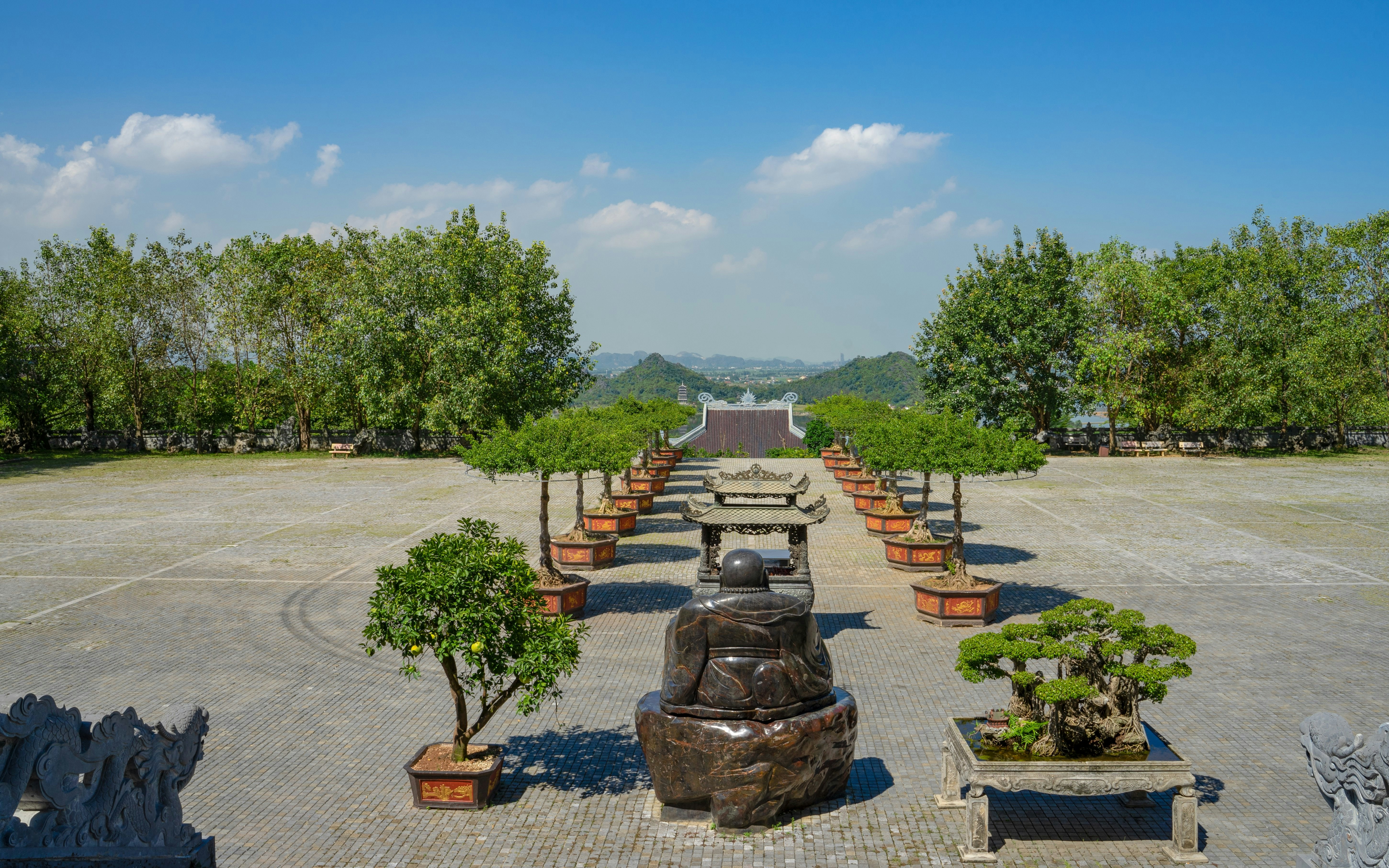
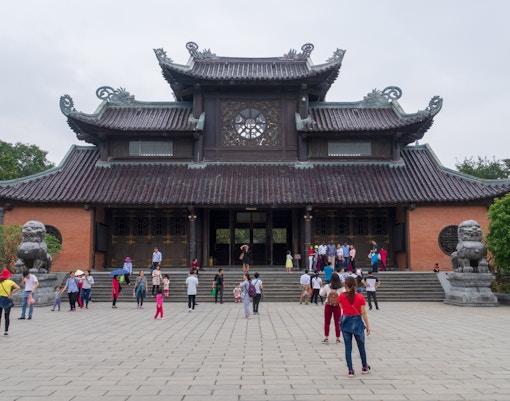
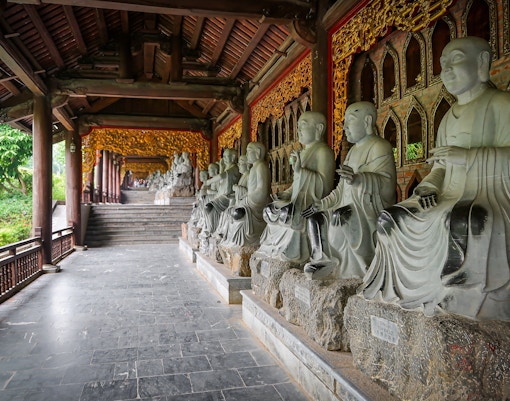
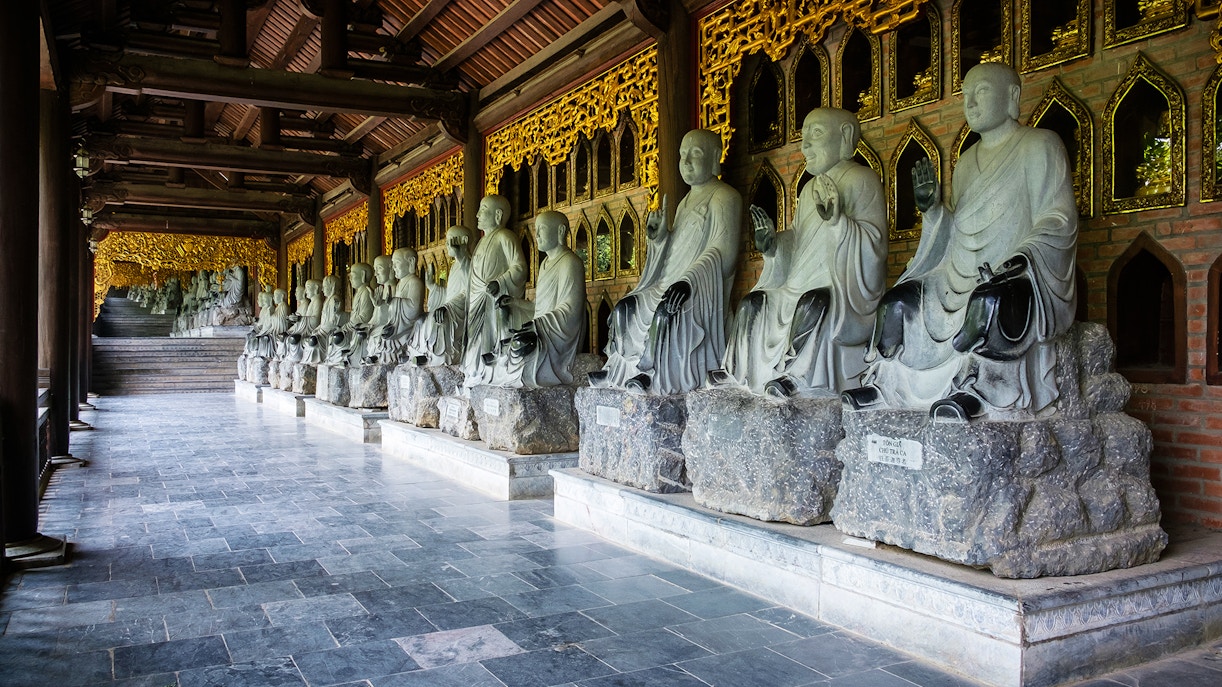
Visitors enter through the grand gates into a spacious courtyard lined with stone statues and landscaped gardens. The area sets a serene tone and offers photo opportunities.
Large bell and drum towers
The complex features a massive bell tower and drum tower. Both structures showcase intricate carvings and provide insight into traditional Vietnamese Buddhist architecture.
Temple halls
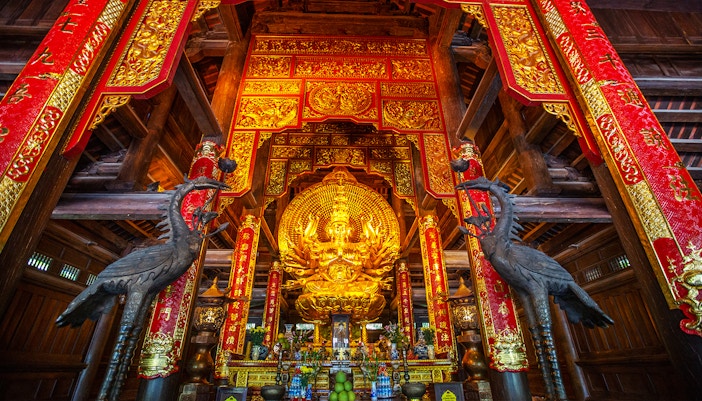
Inside the main halls, worshippers honor Buddha with incense and offerings. The halls are decorated with detailed carvings, gilded statues, and murals depicting Buddhist teachings.
Colossal Buddha statues
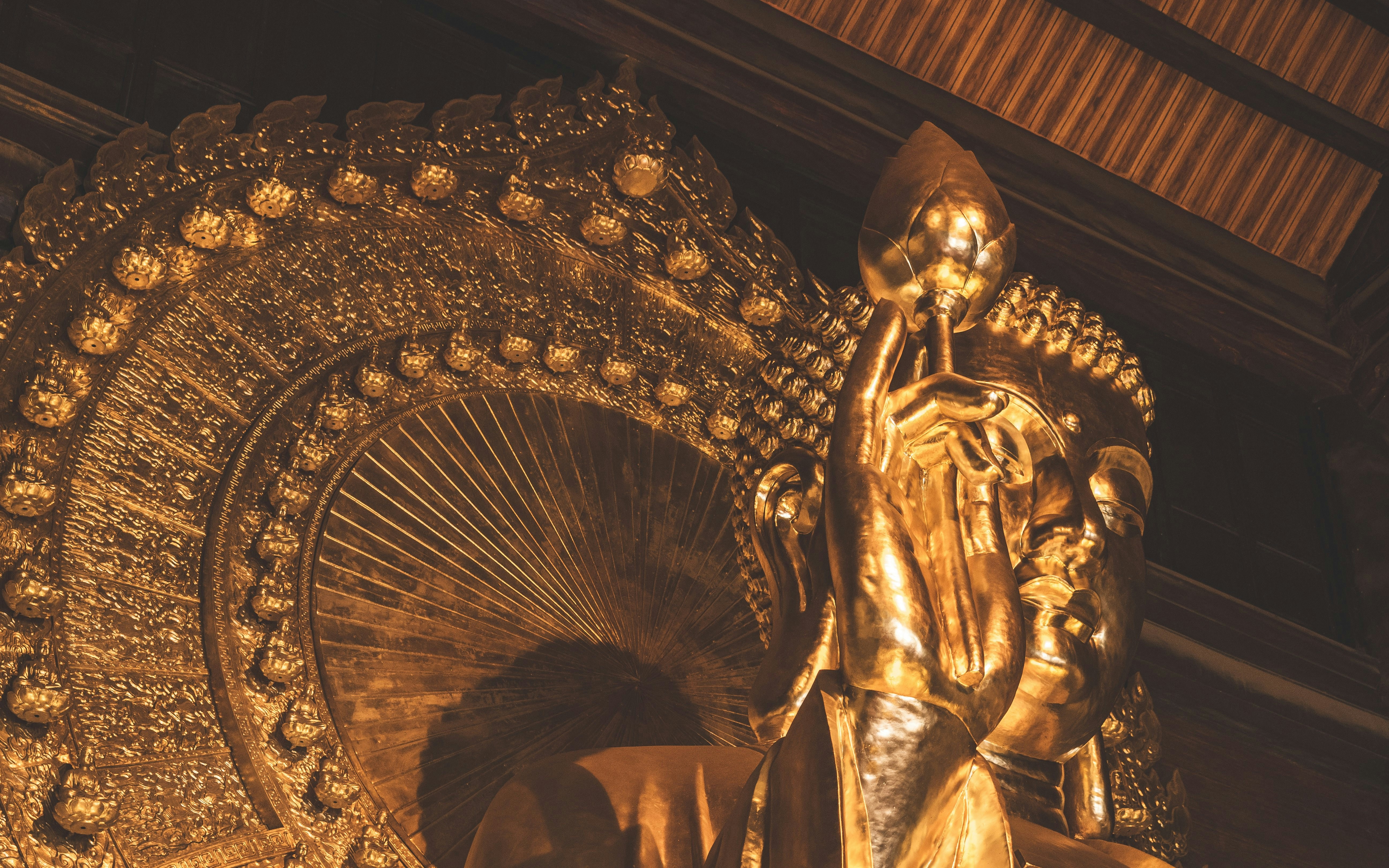
Bai Dinh is home to Vietnam’s largest bronze Buddha statue and several smaller ones. These statues symbolize peace, meditation, and spiritual devotion.
Pagoda steps and scenic views
Visitors can climb steps to the upper pagoda areas for panoramic views of the complex and surrounding Ninh Binh countryside. The elevated vantage points are ideal for photos and reflection.
Architectural highlights of Bai Dinh Pagoda
Traditional Vietnamese pagoda style
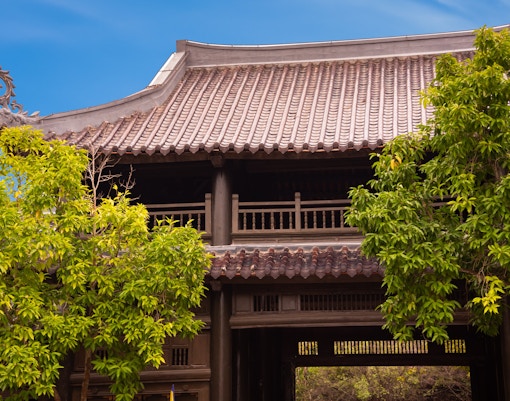
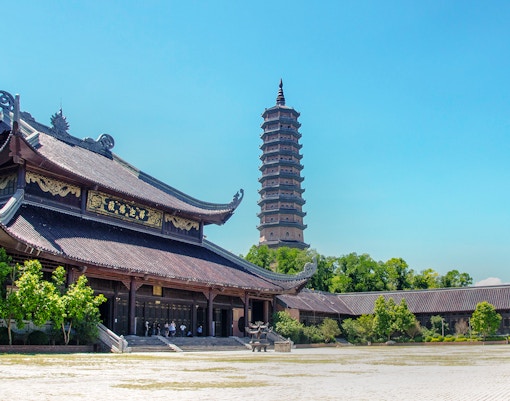
The complex blends classical Vietnamese Buddhist architecture with modern construction, featuring curved roofs, ornate eaves, and wooden brackets that reflect centuries-old design principles.
Stone carvings and reliefs
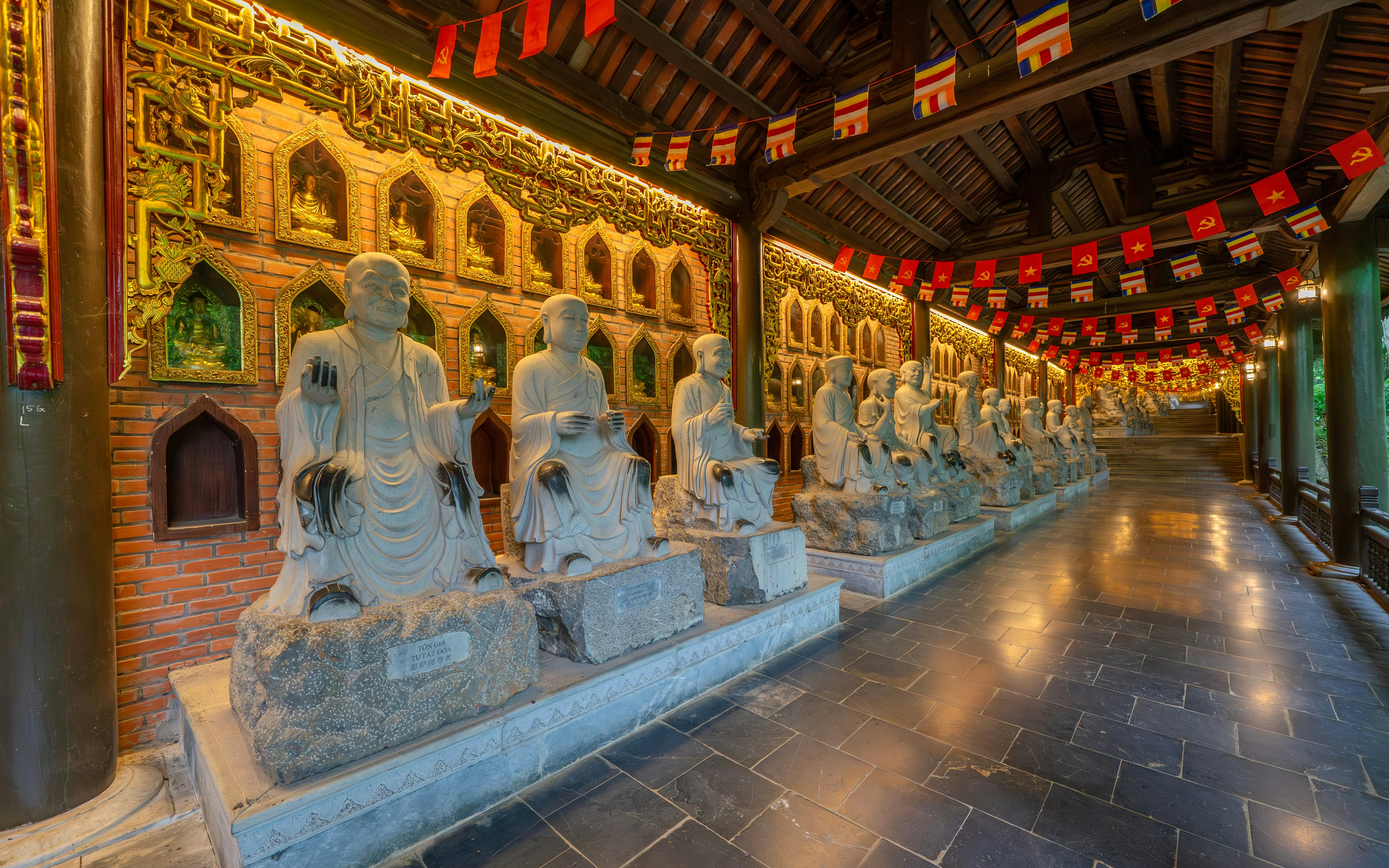
Walls, pillars, and terraces are adorned with intricate stone carvings depicting Buddhist stories, local legends, and floral patterns, showcasing exceptional craftsmanship.
Bell and drum towers
These iconic towers are distinct architectural markers, designed with multi-tiered roofs and elaborate detailing symbolizing harmony and spiritual balance.
Courtyard layout
The arrangement of temples, statues, and open courtyards follows a symmetrical plan inspired by feng shui principles, guiding movement and creating a tranquil atmosphere.
Historical significance of Bai Dinh Pagoda
Bai Dinh Pagoda sits on the site of an ancient temple complex that dates back to the 10th century, originally serving as a place of worship and pilgrimage in Ninh Binh. Over centuries, it gained significance as a spiritual center, with smaller temples and shrines dedicated to Buddhist deities scattered across the foothills. The modern complex, constructed from the early 2000s, was designed to honor this historical legacy while accommodating larger numbers of pilgrims and visitors.
Know before you go
Bai Dinh Pagoda is included in select Ninh Binh full-day tours featuring Trang An.
Tours featuring only Tam Coc or Hoa Lu do not include Bai Dinh.
The pagoda is located north of Trang An, accessible via a short drive from the main tour route.
A visit typically lasts 1–2 hours, depending on the tour itinerary.
Parking and drop-off points are provided near the main entrance for tour vehicles.
Walking across terraces and climbing stairways is required; not ideal for visitors with mobility issues.
Wear comfortable shoes suitable for walking and climbing.
Modest clothing is recommended; shoulders and knees should be covered.
Children must be supervised at all times.
Some areas may have uneven paths; caution is advised.
Photography is allowed, but avoid disturbing worshippers.
Bring water, sunscreen, or a hat for sun protection.
Guided commentary is included as part of the tour.
Early departures avoid crowds.
Avoid peak hours during major festivals when the site can be very busy.
Respect the cultural and religious significance of statues, shrines, and ceremonial areas.
Follow instructions from tour guides and staff for smooth navigation through the complex.
Frequently asked questions about Bai Dinh Pagoda tickets
No, it is included only in select full-day tours with Trang An. Tam Coc tours do not include Bai Dinh.
No separate tickets are sold. Access is included in the select tour package.
Typical visits last 1–2 hours as part of the full-day tour.
Yes, but stairways and terraces may be challenging for those with mobility limitations.
Modest clothing is recommended; shoulders and knees should be covered.
Yes, but avoid disturbing worshippers or ceremonial activities.
Yes, basic facilities are available at the entrance and main terraces.
Yes, the tour provides commentary as part of the package.
Visitors should be cautious on stairways and uneven terraces, especially in wet conditions.